 2 min
2 minJoint Circles
Easy- Gently circle ankles, then knees (small range).
- Roll shoulders forward and back.
- Keep breathing slow and steady.
Free Home Routine
A structured tai chi workout for beginners: gentle warm-up, flowing core moves, and a calm cool-down—about 20 minutes, no equipment, at home.
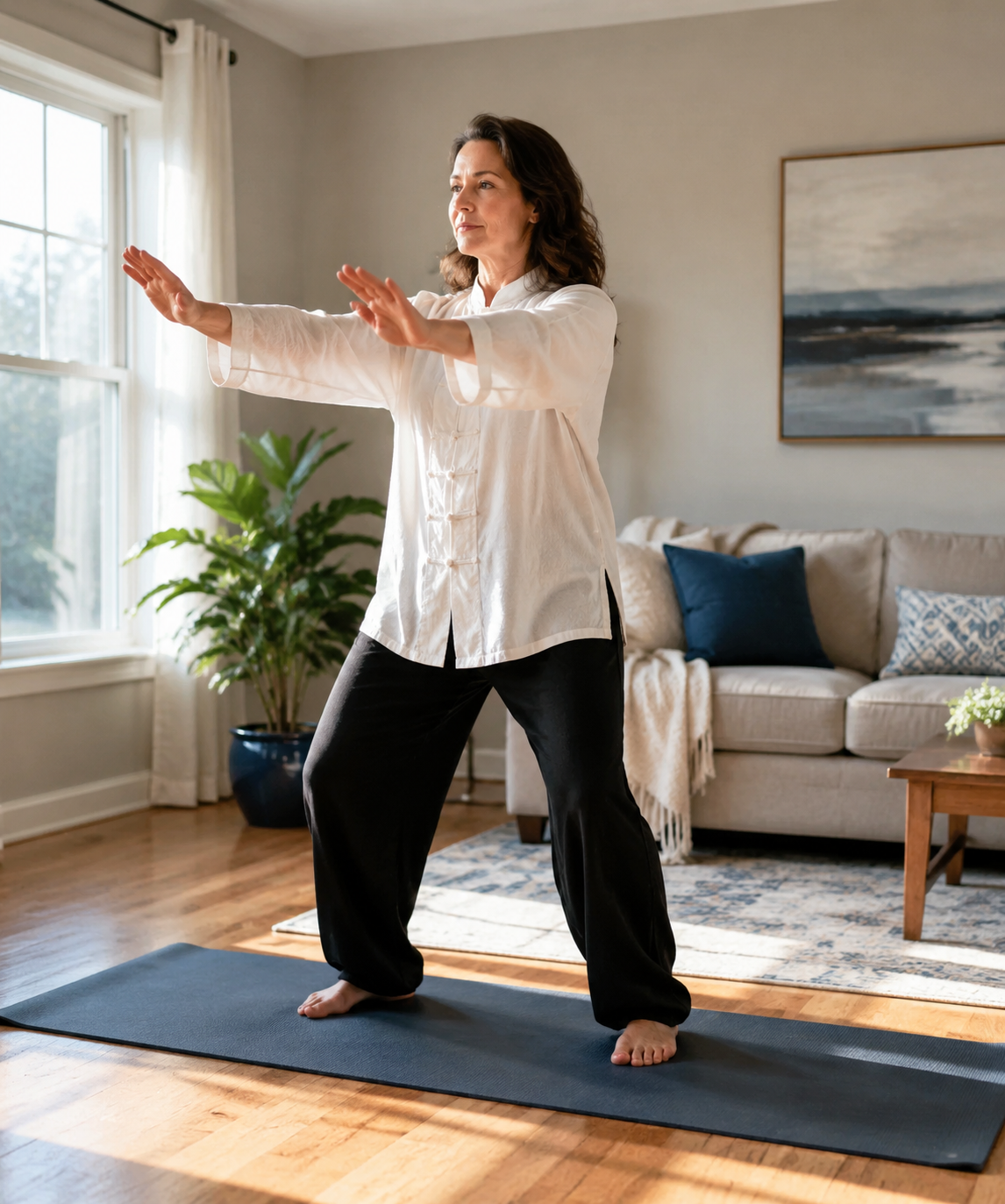
Free Printable Tai Chi Workout Plan
20-minute checklist with warm-up, core moves, and cool-down. Enter your email to unlock the free printable plan.
A good tai chi workout is more than random stretches. It has a clear arc: wake up the joints, move with continuous flow, then settle the breath. The goal is control and calm—not sweating for its own sake.
This page gives you a complete 20-minute home routine plus shorter and longer options. If you prefer stepping practice instead of standing forms, try ourtai chi walkingguide after you finish.
“Tai chi exercises” are individual moves; a “tai chi workout” strings them into a timed session. Use both: learn moves on theexercises hub, then practice them here as a routine.
Video source:YouTube
Use this simple structure every time. If balance feels limited, shorten stances and stay near a wall.
Do joint circles and slow weight shifts until shoulders and hips feel loose.
Flow through Opening Form, Cloud Hands, Parting Wild Horse’s Mane, and Brush Knee without rushing.
Use Gathering Breath and stand quietly. Note any tension and release the jaw and shoulders.
Timed session
Warm-up 5 minutes → Core 12 minutes → Cool-down 3 minutes. Move continuously; pause only if you need to reset posture.
2 min 3 min
3 min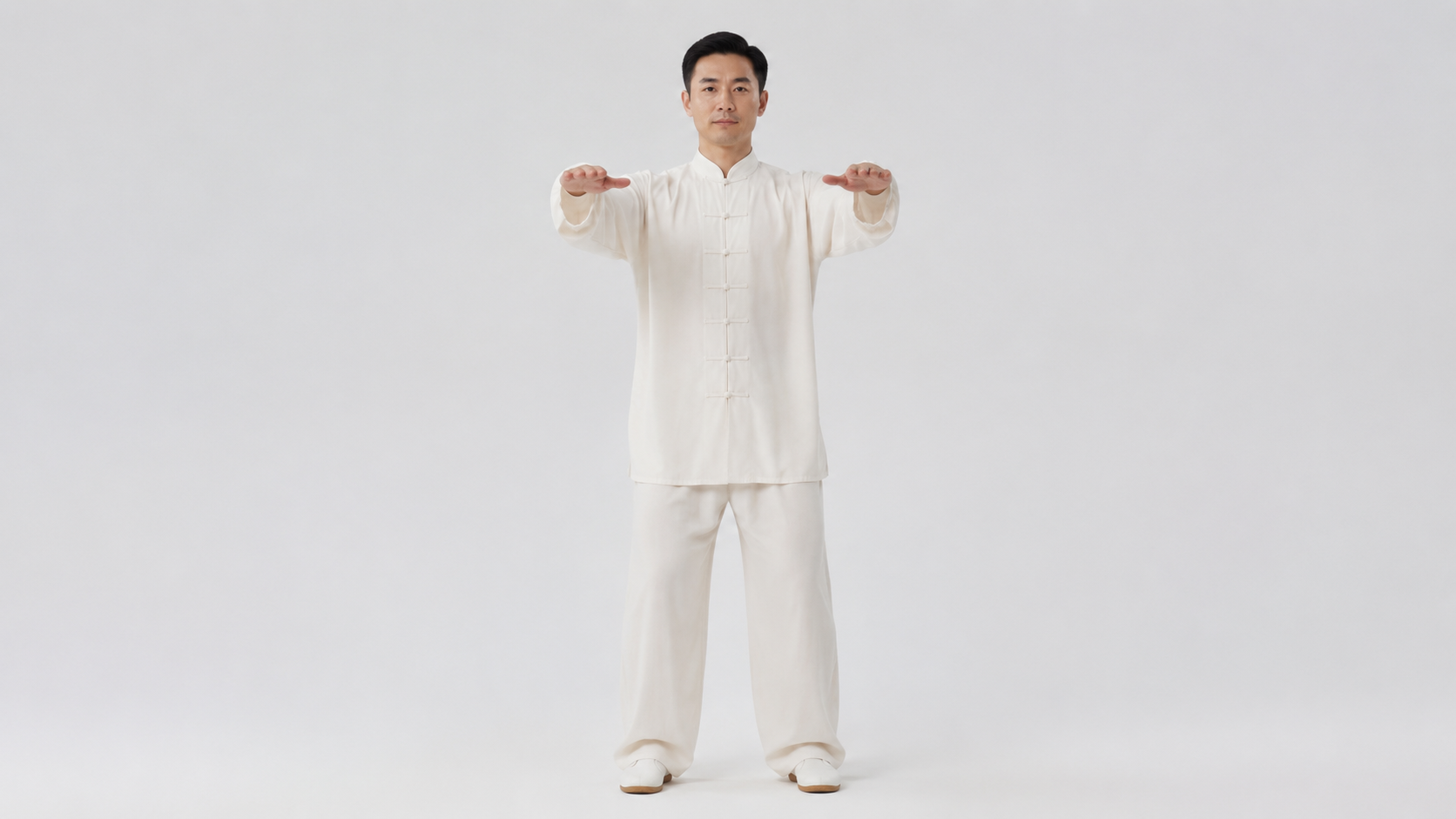 2 min
2 minWatch for
Raising shoulders toward ears · Locking the knees
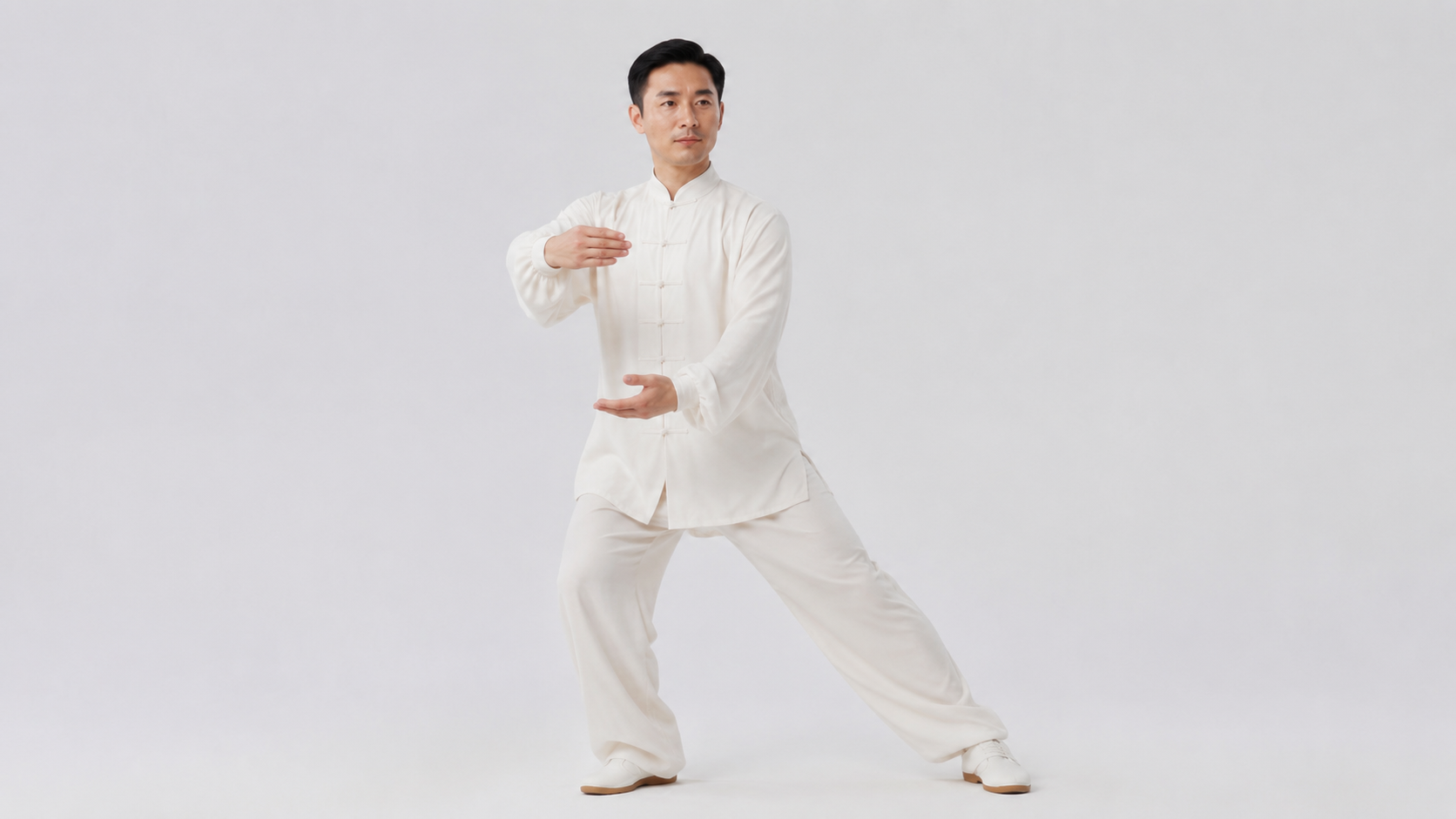 3 min
3 minWatch for
Twisting the knees inward · Moving arms without shifting weight
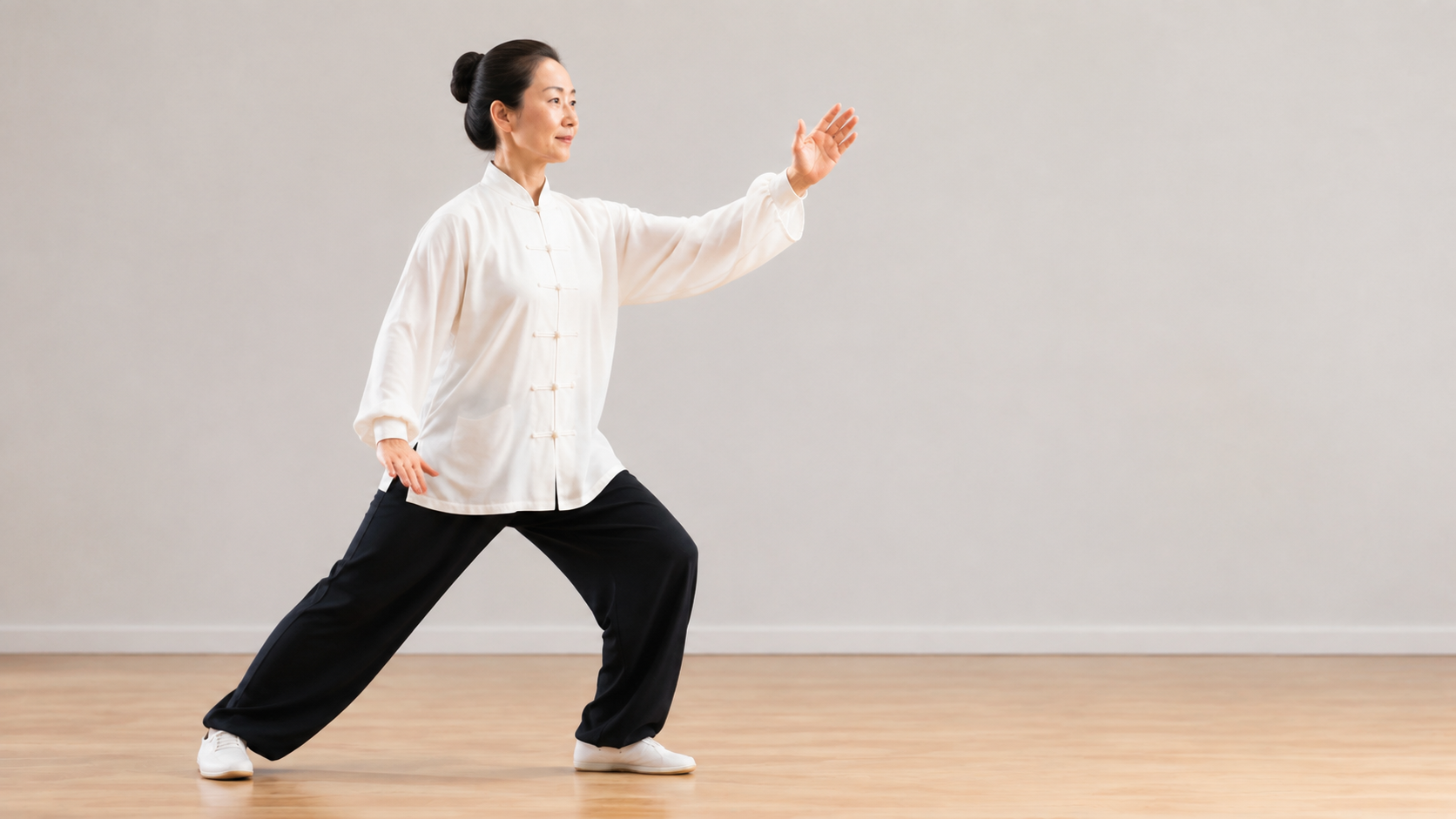 3 min
3 minWatch for
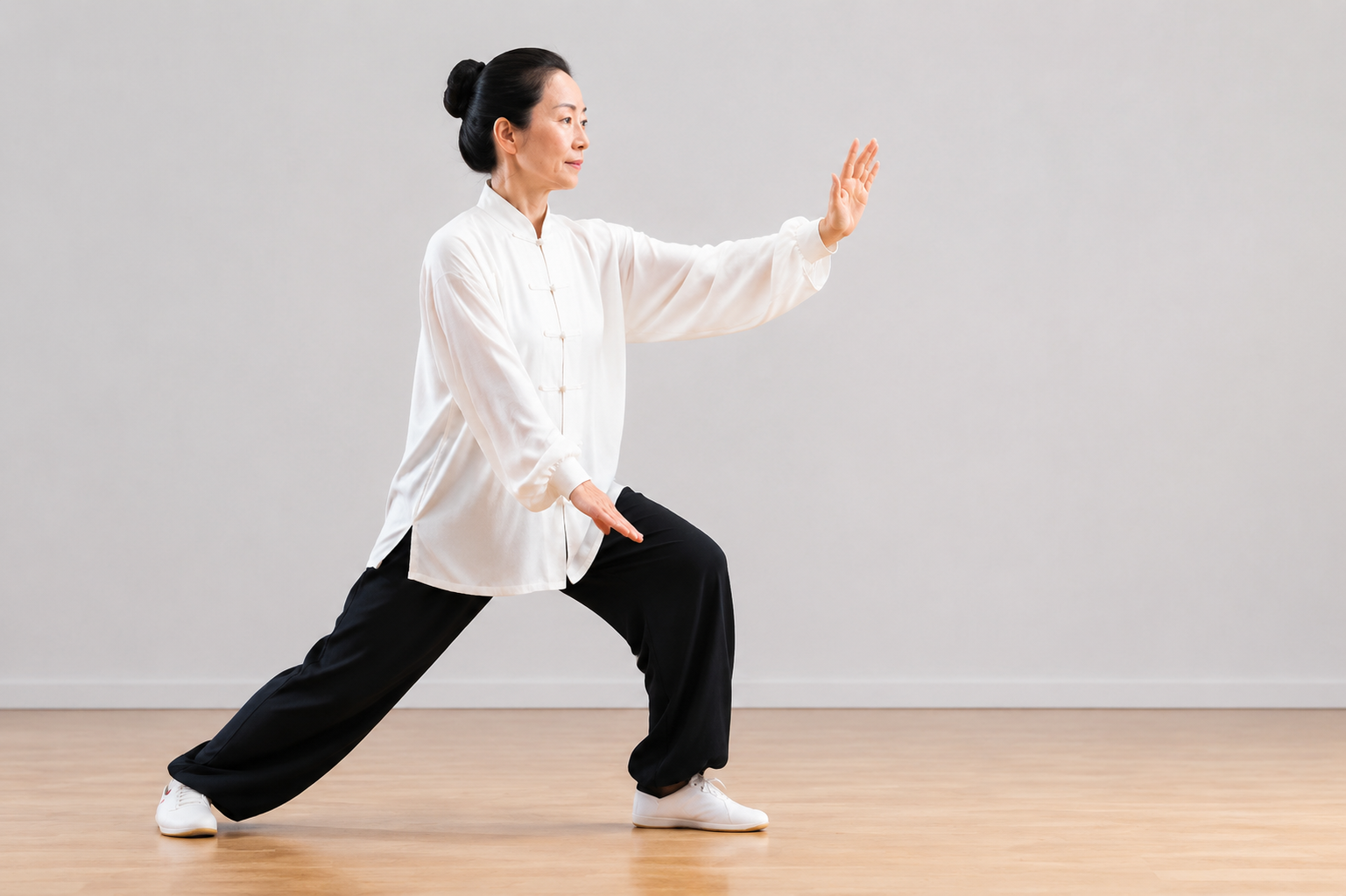
Overstriding · Leaning the torso too far forward
 2 min
2 min 3 min
3 minTai chi exercises are the individual moves (Cloud Hands, Brush Knee, and so on). A tai chi workout is those moves arranged into a timed session. Browse thetai chi exerciseshub to learn moves, then return here to practice them as a routine.
Choose a length
Same calm pace—only the volume changes.
10 min
2 min warm-up + Cloud Hands + Opening Form + 2 min cool-down.
20 min
Full warm-up, all core moves, and cool-down as written above.
30 min
Repeat Cloud Hands and Brush Knee blocks once more; keep the same calm pace.
Why it helps
Legs, hips, arms, and core work together without jumping or heavy loading.
A 20-minute structure is easier to keep than an open-ended practice.
Moves are common teaching sequences with room to shorten the stance.
A landmark NEJM trial found tai chi improved fibromyalgia symptoms more than an aerobic comparison in that study population (Wang et al., 2010). Individual results vary.
Source: New England Journal of Medicine, 2010 (Wang et al.)Reviews of tai chi often report benefits related to balance, mobility, and perceived well-being when programs are practiced consistently.
Source: NCCIH — Tai Chi overviewFAQ
A tai chi workout is a timed practice session that combines warm-up, flowing movements, and cool-down. It turns individual tai chi exercises into a complete routine you can repeat at home.
Start with 10–20 minutes. The 20-minute plan on this page is a solid default. Shorten the stance or skip a move if balance feels shaky.
No. Wear comfortable clothes and flat, supportive shoes. Practice on a non-slip surface with enough room to step forward.
Exercises are individual moves. A workout is a sequenced session with timing. Learn moves as exercises, then practice them as a workout for consistency.
You can alternate. Walking emphasizes stepping and balance; this workout emphasizes standing forms and arm–leg coordination. Many people do walking on some days and a workout on others.
No. This is educational fitness content. If you have pain, dizziness, or chronic conditions, get medical advice before starting.
Trytai chi walkingfor a stepping-focused practice, or theseniors walking guidefor extra safety tips.
Free plan
Enter your email to unlock the printable 20-minute plan. Download starts immediately.
We respect your privacy. Your download starts right after a valid email.
Informational only—not medical advice. Consult your healthcare provider before starting any exercise program.